
It always happens at 2am. That sharp little chirp from somewhere in the ceiling. You stumble around in the dark, find the right alarm, mash the test button, and pray it stops. Sometimes it does. Often it starts again 20 minutes later.
If your smoke alarm is chirping, it is trying to tell you something specific. The good news: it is rarely an emergency. The slightly less good news: in Queensland, a chirping alarm is often the first sign that you are heading into a much bigger compliance problem before the January 2027 deadline.
Here is what every chirp actually means, what to do tonight, and when it is time to stop replacing batteries and replace the alarm itself.
The 7 reasons your smoke alarm is chirping
A chirp is not a real alarm. A real fire alarm is a continuous, screaming wail — you will not mistake it. A chirp is a single, short beep that repeats every 30 to 60 seconds. It is a maintenance signal.
In order of how common they are in Brisbane homes:
1. The battery is flat (most common)
About 80% of chirping smoke alarms in Brisbane homes are flagging a low battery. The chirp is engineered to be just annoying enough that you cannot ignore it for long.
What to do tonight: Replace the 9V battery. Even if your alarm is hardwired to mains power, it has a backup battery that needs replacing every 12 months or so.
When this is the wrong answer: If your home was built or last renovated before 2017, and the chirping alarm is more than 10 years old, replacing the battery is a temporary fix on an alarm that is also expired. More on that below.
2. The alarm has reached end-of-life
Every smoke alarm has an expiry date — usually 10 years from manufacture. After that, the sensor degrades and the alarm cannot reliably detect smoke. Most modern alarms are designed to chirp continuously when they hit end-of-life, even with a fresh battery.
How to check: Take the alarm off the ceiling and look on the back. There is a manufacture date printed on it. If it is more than 10 years old, no battery will fix it. The unit needs replacing.
The Queensland twist: If your alarm is expiring now, you are required by QLD law to replace it with a photoelectric, interconnected, sealed-10-year-battery alarm — not the same kind that is currently chirping. The cheap supermarket replacement will not be compliant.
3. The battery is not seated properly
Sometimes the chirp is just a loose battery contact. Take the alarm down, remove the battery completely, wait 10 seconds, and reinsert it firmly. Hold the test button for 15 seconds with the battery out to drain residual charge before reseating.
4. Dust, cobwebs or insects in the sensor
Brisbane homes deal with humidity, ceiling-cavity dust, and the occasional insect. All three confuse smoke alarm sensors and can trigger intermittent chirps or false alarms.
What to do: Take the alarm down and gently vacuum around the sensor vents using a soft brush attachment. Do not use compressed air — it can push debris deeper.
5. Temperature or humidity swings
Sudden changes — like air-con kicking on, a hot Brisbane day after a cool night, or steam from a long shower drifting down the hallway — can trigger nuisance chirps in older ionisation alarms. Photoelectric alarms (the QLD-required type) are far less prone to this.
6. One alarm in an interconnected network is faulty
If you have interconnected alarms (required for new installations under QLD law), one faulty unit can cause every alarm in the house to chirp. Walk around and listen. The faulty one usually has a different rhythm or a flashing red light pattern.
7. Wiring or power supply issue (hardwired alarms)
If your alarms are 240V hardwired, a chirp can also indicate a wiring fault, a tripped breaker that has been reset, or a brief power interruption. This is the one situation where you should not DIY — only a licensed electrician can legally diagnose and fix mains-wired smoke alarm circuits.
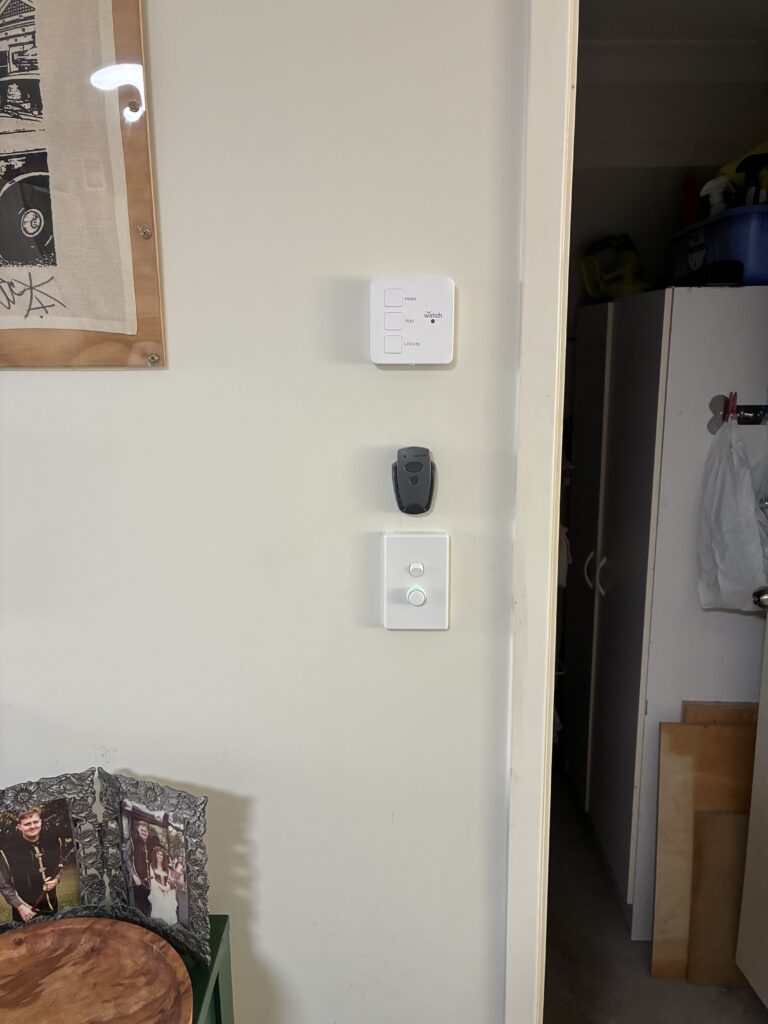
Quick troubleshooting flowchart
Use this in the order listed. Stop at the first one that fixes the chirp.
- Identify which alarm is chirping (in interconnected systems, walk room to room).
- Check the manufacture date on the back of the unit. Older than 10 years? Replace the alarm, not the battery.
- Replace the battery with a fresh, name-brand 9V (Duracell, Energizer — not the dollar-shop ones).
- Reseat firmly and hold the test button until you hear a confirmation beep.
- Vacuum the sensor gently with a soft brush.
- Wait 10 minutes. Sometimes the alarm needs to clear residual signal.
- Still chirping? The alarm itself is faulty or expired. Time to replace.
When to stop replacing batteries and replace the alarm
Be honest about the situation. If any of these are true, your smoke alarm is at end-of-life and a fresh battery is just buying you a few weeks:
- The alarm is more than 10 years old (check the manufacture date).
- You have replaced the battery within the last 6 months and it is chirping again.
- The alarm is yellowed or discoloured.
- It went off randomly even before the chirping started.
- You can see scorch marks, dust build-up inside, or insect damage.
Once an alarm hits end-of-life, the sensor can fail silently — meaning it might still chirp for low battery but no longer reliably detect actual smoke. That is the dangerous scenario.
The Queensland 2027 angle most homeowners miss
Here is what most Brisbane homeowners do not realise: if your alarm is chirping because it is expiring, you are not allowed to replace it like-for-like.
From 1 January 2027, every Queensland home (not just rentals) must have (per the QFES smoke alarm rules):
- Photoelectric smoke alarms (not ionisation).
- Interconnected alarms — when one goes off, they all go off.
- An alarm in every bedroom, plus hallways serving bedrooms, plus on every storey.
- Hardwired or sealed 10-year battery — no replaceable 9V batteries on new installs.
The cheap $20 single alarm at Bunnings will not meet any of those criteria. You can replace it, and it will work, but you will need to do the whole job again before the deadline.
If your alarm is chirping and expired, this is the moment to upgrade properly — once. Read the full QLD smoke alarm legislation or the complete compliance checklist to see exactly what your home needs.
When to call an electrician (and when not to)
You can DIY: Replacing a 9V battery in a battery-only alarm. Vacuuming the sensor. Reseating a loose battery.
Call a licensed electrician:
- Anything involving a 240V hardwired alarm circuit.
- Installing or replacing a hardwired smoke alarm (it is illegal to do this without an electrical licence in Queensland).
- Setting up an interconnected alarm network.
- Doing the full 2027 compliance upgrade.
- Anything where you need a compliance certificate (rentals, sales, or peace of mind).
If you are about to spend $30 on a replacement alarm and a $15 9V battery for an alarm that needs replacing anyway, that money is better put toward a compliant upgrade. See our pricing for what a proper job actually costs.
Frequently asked questions
My smoke alarm chirped once and stopped. Should I worry?+
A single isolated chirp is usually a power blip, a temperature swing, or a momentary sensor read. If it does not repeat within 24 hours, you can probably ignore it. If it returns, treat it as a low-battery warning and replace the battery as a first step.
I replaced the battery and it is still chirping. What now?+
Take the alarm off the ceiling and check the manufacture date on the back. If it is older than 10 years, the alarm itself is at end-of-life and needs replacing — no battery will fix it. If it is newer than 10 years, try the troubleshooting steps above (vacuum, reseat, wait 10 minutes). Still chirping? The unit is faulty.
Can I just take the battery out to stop the chirping?+
No — please do not. A disabled smoke alarm is the leading cause of fatal house fires. Worse, in Queensland, a non-functional smoke alarm can void your home insurance and is a legal breach for landlords. If the chirping is unbearable tonight, replace the battery as a stopgap and book a proper inspection within the week.
Why does the chirp always seem to start at 2am?+
It is not actually targeting you personally. Battery voltage drops slightly with temperature — and the coldest part of a Brisbane night is usually 3–5am. A battery that was just barely powering the alarm during the day finally drops below the threshold overnight, triggering the low-battery chirp. Cruel timing, but consistent physics.
All my alarms are chirping, not just one. What does that mean?+
If they are interconnected (linked together by wire or wireless signal), one faulty unit will trigger all of them. Identify the faulty alarm by looking for the one with a different LED pattern. If they are independent and all chirping at once, they were probably all installed at the same time and are all hitting end-of-life together — a strong sign you need a full system replacement, ideally to the new 2027-compliant standard.
Are sealed 10-year battery alarms really maintenance-free?+
Almost. Sealed-battery alarms are designed to last the full 10-year life of the alarm without any battery changes. You should still test them monthly by pressing the test button, and vacuum the vents annually. After 10 years they reach end-of-life and need replacing — just like every other smoke alarm.
Get a fixed-price quote with same-day compliance certificate from Brisbane Smoke Alarms & Compliance — visit brisbanesmokealarmcompliance.com.au or call 0448 316 304.